Collaborator Profile: Metalworker Matteo Salvato

Image: Matteo Salvato, Photographer: Doria Mueller-Beilschmidt
Continuing in Alward's profiles of artisans, we spotlight Matteo Salvato of Salvato Fabrications. Matteo is a metalworker and fabricator who merges artistry with technique. At his new workshop in Richmond, he collaborates with architects, designers, and contractors to transform complex concepts into refined, buildable metalwork. From design consultation through to final installation, Matteo combines creative insight with technical precision to deliver work that is both artful and achievable. Using SolidWorks, Salvato Fabrications produces detailed 3D models and technical drawings that ensure accuracy, efficiency, and seamless field execution.
AC: Where did you learn to weld?
MS: I wasn’t sure what I wanted to do as a teenager, but I knew one thing for sure—I loved working on my 1968 Chevy El Camino. I’d spend hours under the hood, wondering why I couldn’t just make the parts myself. That curiosity led me to welding classes through Kennedy High School Adult Education Program, and from the first spark, I was hooked. Later, I took more courses at The Crucible in Oakland, where I met my teacher and mentor, Warren Breslau. Working alongside him taught me more than just welding and machining—it shaped how I approach everything I make. Pride in your work, attention to detail, and the belief that anything worth doing is worth overdoing—that’s stayed with me ever since.
AC: You started restoring classic cars in high school. What are some of your favorite models and why?
MS: I’ve always been partial to GM models from the early ’40s through the late ’60s. They had a perfect balance of design, simplicity, and reliability. Some of my favorites are the 1959 Buick Electra, the 1951 Buick Super Deluxe, the 1961 Cadillac, and, of course, the 1968 El Camino and Chevelle. That era—especially the Atomic Age—was a golden time for automotive design. There were far fewer regulations, and designers were free to push boundaries and experiment with form. Every curve, every line, had intention. Everything was built with the future in mind. Those cars weren’t just machines—they were industrial art in its purest form.
AC: What was it about Ayn Rand’s novel The Fountainhead that inspired you to open Salvato Fabrication?
MS: I read The Fountainhead during the summer of ’22, and it couldn’t have come at a better time. Ayn Rand’s story about integrity and individuality hit me hard—especially the contrast between Howard Roark, who refuses to compromise his vision, and Peter Keating, who lives for approval. I realized I’d been living too much like Keating, chasing efficiency and recognition instead of focusing on craft and authenticity. That realization was painful but necessary. I remember finishing the book by the water at Bear River Reservoir, feeling both heartbroken and inspired. A few weeks later, I left my job and founded Salvato Fabrications—a place where I could finally build work that reflects my own standards and ideals. If you haven’t read The Fountainhead, I highly recommend it—it just might change the way you see your work, too.
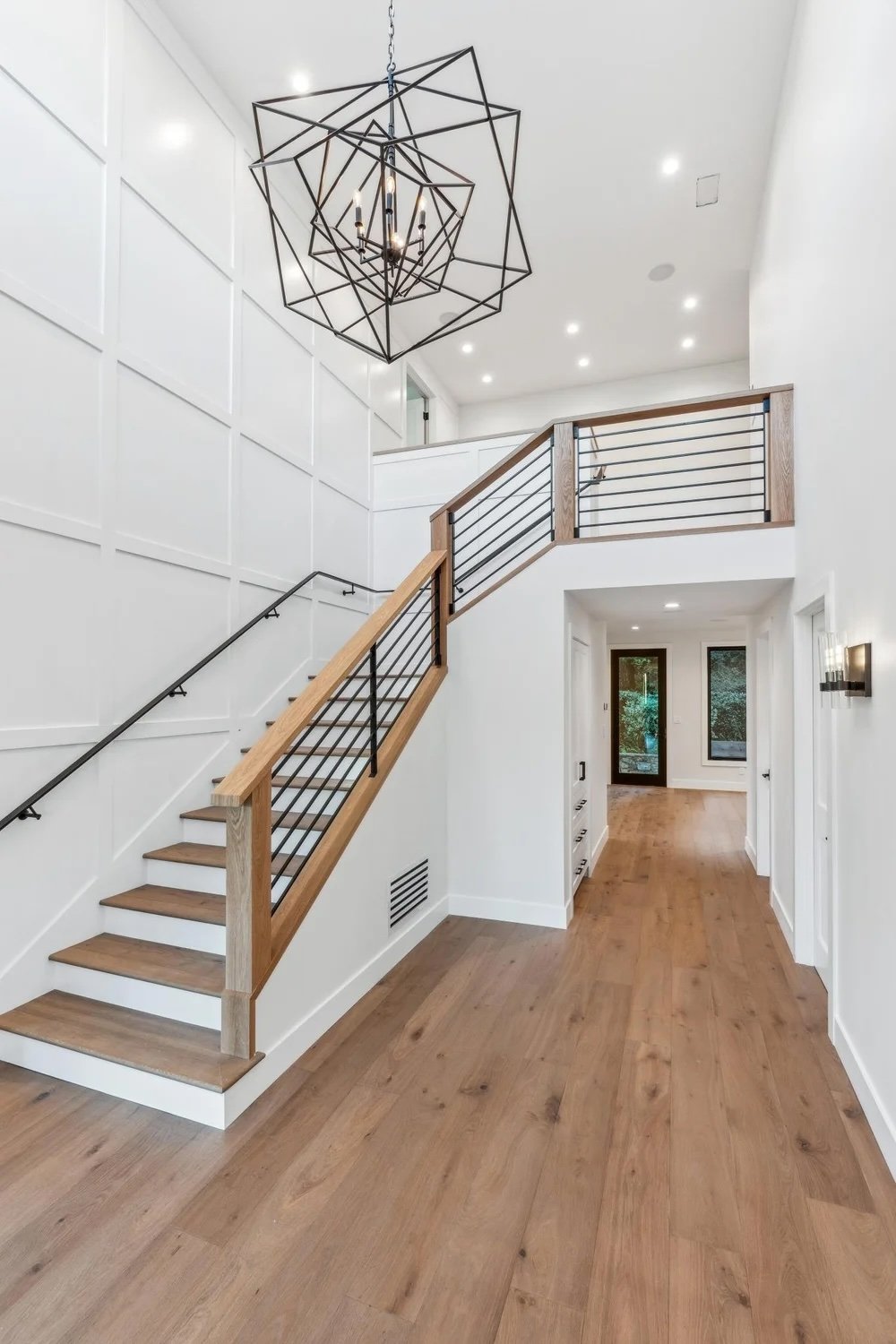
Modern Farmhouse collaboration with Alward and Salvato
AC: You recently moved to a new location in Richmond’s industrial district, which is now home to numerous businesses specializing in the building trade. How are you finding the neighborhood?
MS: I love it here. Compared to my previous location, this neighborhood feels clean, professional, and full of other small businesses with similar goals and values. The move has been an entirely positive experience, both for me personally and for my business.
AC: How do you collaborate with architects, contractors, designers, and homeowners?
MS: Collaboration always starts with listening. Everyone—architects, contractors, designers, homeowners—brings a unique vision, and my job is to turn that vision into something real without compromising quality or integrity. I bring my experience, creativity, and judgment to the process, staying honest about what’s possible while elevating the design. The goal is always the same: to create something meaningful, lasting, and unmistakably human.
AC: In a market dominated by box stores, how do artisans remain relevant?
MS: There’s a lot that box stores can’t offer. They don’t provide personal experience, imagination, authenticity, or integrity. Instead, they mass-produce generic products for profit and efficiency, often at the expense of the people making them. Everything I create stems from years of accumulated knowledge and experience, and each piece requires considerable time and effort to produce. Beyond that, I pour a part of myself into my work—my energy, my emotion, and honestly, a small piece of my soul. I believe that carries through, and people can feel it when they interact with what I’ve made. That’s what keeps artisans relevant. We offer something genuine—something real and human— in a world that’s increasingly uniform, controlled, and impersonal.
AC: What do you enjoy doing when not welding and fabricating metal?
MS: The little time I spend out of the shop is usually spent in nature. I recently started backpacking in the Sierra Nevada Mountains with my dad, something I’d always wanted to do but never made time for. We take short weekend trips in the summer, hiking stretches of the PCT or exploring spots that catch our eye on Google Earth. Closer to home, you can often find me at Salt Point on the Sonoma Coast, wandering along the cliffs, admiring the rock formations and micro-habitats tucked into the shoreline, or simply stretching out and feeling free.
When winter comes around, most of my free time goes into waterfowl hunting in the rice fields. I don’t buy farmed meat, so hunting gives me what I believe is the most ethical way to eat—honest, direct, and deeply connected to where food comes from. There’s something primal and grounding about it, the same feeling I get when I’m deep in the mountains.
I also love playing dominoes in the morning with friends over an espresso.
AC: What is your dream project?
MS: I’d love to create large sculptural installations for residences or wineries. Someday, I hope to step back from day-to-day responsibilities and spend more time exploring the deeply personal and creative side of my work.

Untitled Sculpture by Matteo Salvato